
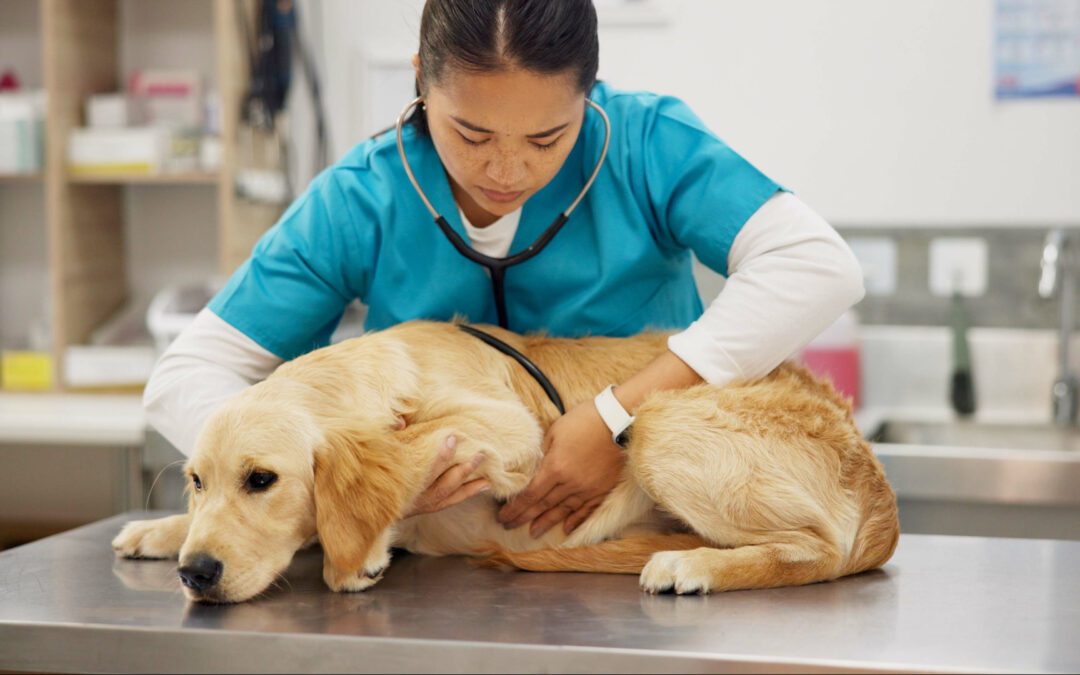
Working dogs are elite athletes with jobs that demand precision, strength, and lightning-fast reflexes. Whether your dog is trained for service work, police work, agility competition, search and rescue, or herding, their body undergoes a level of physical stress most pet owners never see. Chiropractic care helps your working dog maintain the structural integrity needed to perform at their best.
By supporting healthy biomechanics and uninterrupted nerve communication, routine adjustments keep your dog sharp, strong, and responsive.
Why Working Dogs Are Prone to Subluxations
Working dogs are incredibly stoic. Their drive to do their job often overrides early pain signals. By the time you see a limp, shortened stride, hesitation, or behavioral shift, the problem has likely been building for weeks. Chiropractic care identifies and corrects these issues before they turn into injuries that require rest, medications, or even surgery.
If your dog performs demanding, skill-based work, you need to know how quickly spinal restrictions, called the Vertebral Subluxation Complex, can interfere with their performance. A subluxation happens when a spinal joint loses normal movement, and even a small restriction can:
- Dampen nerve communication
- Affect coordination
- Cause imbalanced movement
- Increase the risk of tears, sprains, and muscle overload
How Chiropractic Care Enhances Performance and Safety
Your dog’s spine is more than a column of bones, as it’s the control center of the nervous system. When spinal motion is restricted, the entire body is affected. Routine chiropractic care restores that motion and supports key performance functions.
Here’s how adjustments help your working dog move efficiently:
Improved proprioception
Your dog must always know where their feet are, especially during obstacle work, bite work, or sudden turns. Proper joint mobility ensures that proprioceptive signals are correctly transmitted, sharpening your dog’s coordination and accuracy.
Corrected compensatory movement
If one area of the spine is restricted, your dog will shift weight to other joints. Over time, that compensation creates strain in the shoulders, wrists, hips, and knees. Adjustments restore balance so your dog uses their body evenly.
Better organ and autonomic function
The spinal cord branches into nerves that regulate organs. Misalignments can interfere with digestion, stamina, and recovery. Keeping the spine aligned helps maintain full-body function.
Reduced accumulation of micro-traumas
Consistent, routine care addresses small issues caused by countless minor stresses, preventing them from escalating into serious injuries.
Common Mistakes in Working Dog Care
The most harmful mindset a handler can have is, “If nothing looks wrong, everything must be fine.” By the time a working dog hesitates, yelps, or refuses a command, the problem has usually been building for weeks and sometimes months. Another mistake is relying only on medication to manage stiffness.
While NSAIDs can offer temporary relief, they often hide the pain without fixing the underlying mechanical issue. When a dog keeps working on a restricted joint, the instability speeds up wear-and-tear, arthritis, and long-term degeneration. Many handlers also assume regular exercise is enough to keep a dog mobile. Conditioning strengthens muscles, but it cannot free a stuck joint. A spinal misalignment cannot be resolved through movement alone; it requires skilled, hands-on correction to restore proper function.
What a Proper Canine Chiropractic Evaluation Includes
Chiropractic care for working dogs is methodical and tailored to the individual animal. This approach focuses on helping your dog move with efficiency, confidence, and comfort. A typical session includes:
- Gait Analysis: Watching your dog walk, trot, and turn reveals subtle imbalances that you may overlook.
- Static and Motion Palpation: Hands-on assessment detects restricted joints, inflammation, and muscle tension.
- Gentle, Precise Adjustments: A trained animal chiropractor uses a controlled, quick, low-amplitude thrust to restore joint motion safely.
- Neurological Rebalancing: After the adjustment, you often see immediate changes, like relaxation, smoother movement, or improved posture.
Supporting Long-Term Mobility and Career Longevity
Your dog trains hard. Their spine and nervous system should be treated with the same level of care and precision. When you invest in routine spinal care, you’re protecting their long-term mobility, reaction time, and functional strength. By giving your dog consistent spinal support, you help them:
- Stay agile
- Recover faster
- Reduce stress on their joints
- Maintain peak neurological function
- Work more comfortably for more years
Don’t wait for an injury to sideline your canine partner. Book a Consultation with our specialists at Southern Touch Healthcare to experience the difference advanced chiropractic care can make for your working dog today!